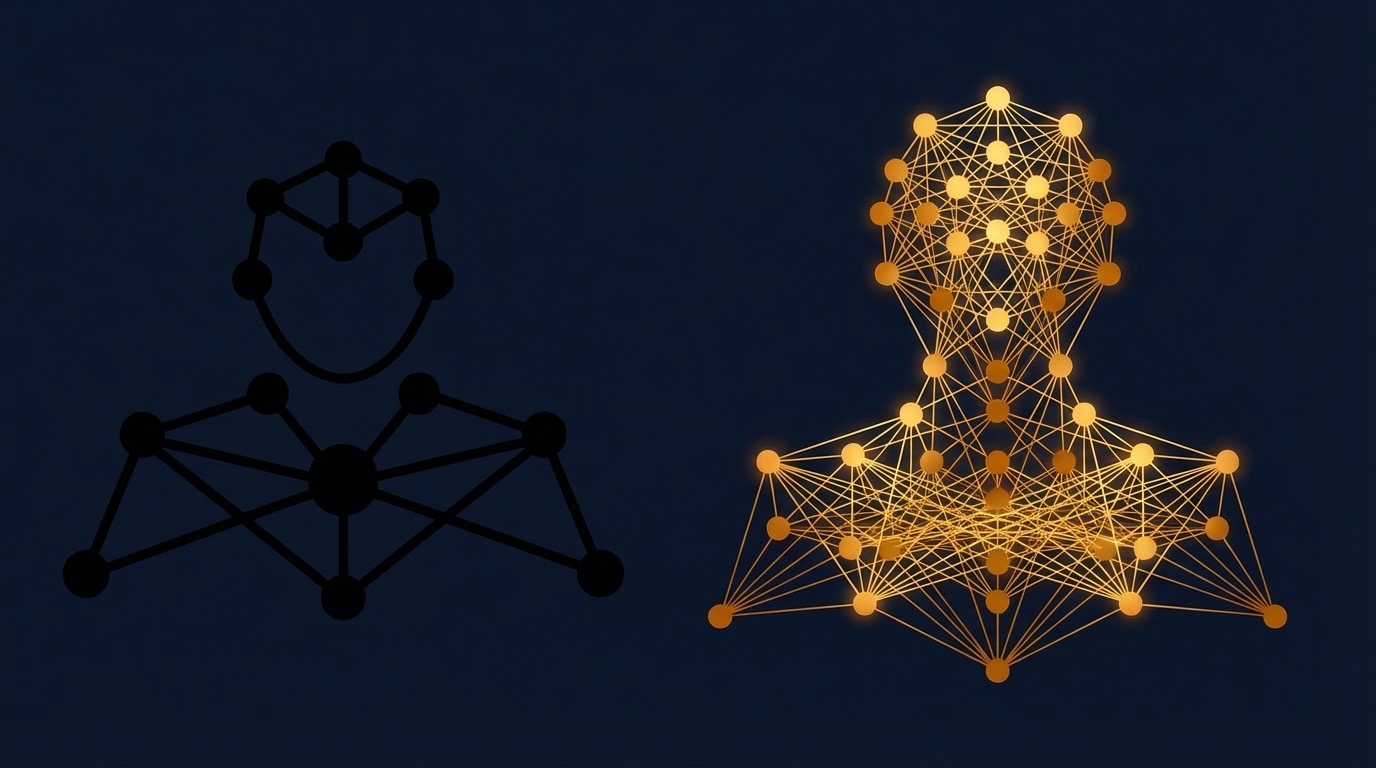
What Separates a Useful Synthetic Persona from a Chatbot Wearing a Costume
"You are Sarah, a 32-year-old product designer who lives in Austin and loves cold brew."
That's not a persona. That's a chatbot wearing a costume.
Yet this is how most "AI persona" tools work. They prepend a demographic description to a system prompt and call it a persona. The result is a stereotype that produces the same generic responses regardless of what you ask. Sarah-the-product-designer will give you vaguely positive feedback on your prototype, mention something about "user-centered design," and sound like every other Sarah generated by the same template.
Real personas are different. They have consistent personality traits that predict behavior. They have documented biases that skew their judgment. They're grounded in real data, not imagination. And they have transparent limitations that help researchers interpret results correctly.
Here are the five criteria that separate a useful synthetic persona from a costume.
1. Validated personality dimensions, not vibes
The most common approach to AI personas is demographic. Name, age, job title, location, maybe a couple of interests. The problem is that demographics describe who someone is. Personality predicts what they'll do.
Two 32-year-old product designers in Austin can have completely opposite reactions to the same product. One is risk-averse, detail-oriented, and skeptical of new tools (high Neuroticism, high Conscientiousness). The other is adventurous, big-picture-oriented, and eager to try anything new (high Openness, low Neuroticism). Demographics alone tell you nothing about which reaction you'll get.
The Big Five personality model — Openness, Conscientiousness, Extraversion, Agreeableness, Neuroticism — has been validated across cultures, languages, and decades of research. Test-retest reliability exceeds 0.80 over six years. These traits are stable, measurable, and predictive of real-world behavior.
Bad persona: "Sarah, 32, product designer, Austin, TX. Likes hiking and craft coffee."
Good persona: "Openness 8/10 (seeks novelty, questions assumptions), Conscientiousness 4/10 (prefers quick decisions over thorough analysis), Extraversion 6/10 (thinks out loud, processes through conversation), Agreeableness 3/10 (pushes back on weak arguments, comfortable with conflict), Neuroticism 5/10 (moderate stress response, realistic about risks)."
The second persona will produce meaningfully different responses depending on what you ask. The first will produce the same pleasant, generic output regardless of context.
Synthicant builds every persona on OCEAN scores. Manual personas let you set these directly through sliders. Dynamic personas extract them from uploaded documents with confidence-weighted aggregation. Either way, the personality dimensions — not the demographics — drive behavior.
2. Documented biases and flaws
Real people have cognitive biases. They anchor on the first number they hear. They overvalue things they already own. They follow the herd. They discount future consequences in favor of immediate gratification.
A persona without biases is a persona without realism. It will evaluate your product rationally, consider all options equally, and give you the "correct" answer instead of the human one.
That's useless for product research. You don't need to know what a perfectly rational person would do. You need to know what your actual customers — with their anchoring bias, their status quo preference, their loss aversion — would do.
Bad persona: No biases defined. The persona evaluates everything on its merits, gives balanced feedback, and reaches the "right" conclusion.
Good persona: "Anchoring bias (fixates on first price seen), status quo bias (reluctant to switch from current tools), confirmation bias (seeks information that supports existing beliefs about the category)."
When Synthicant's system prompt builder encounters bias fields, it weaves them into the persona's behavioral instructions. The persona doesn't just know about its biases — it exhibits them. Ask it about switching from a competitor, and the status quo bias makes it resistant in the same way a real customer would be resistant.
This is where synthetic persona research gets genuinely useful. You can test the same messaging against the same persona with different bias configurations and see which biases your messaging overcomes and which it doesn't.
3. Grounding in real data
A persona without data is a persona running on imagination. It can tell you what a hypothetical person might think, but it can't tell you what your actual customers think — because it has no access to what your actual customers have said.
RAG (retrieval-augmented generation) solves this. Upload interview transcripts, support tickets, product reviews, competitive research, or any other relevant documents. The persona retrieves from this data when responding, grounding its answers in real information rather than generating plausible-sounding fiction.
Bad persona: Generates responses based solely on its personality configuration and the LLM's training data. Might sound realistic, but the content is fabricated.
Good persona: Retrieves from 15 uploaded customer interview transcripts when discussing product concerns. Its responses reference real objections, real use cases, and real language patterns from your data.
Synthicant's RAG pipeline chunks every uploaded document, embeds the chunks using Google Gemini, and stores them in an isolated vector namespace for each persona. When you ask the persona a question, the system retrieves the most relevant chunks and includes them in the response context. The persona's answers are grounded in evidence.
The distinction matters more than it might seem. Without data grounding, you're interviewing a fictional character. With data grounding, you're interviewing a composite representation of your actual customer base.
4. Consistent behavior across sessions
Ask a demographic-only persona the same question in two different sessions and you might get two different answers. There's no personality model anchoring the responses, so the LLM fills in the gaps with whatever seems plausible in the moment.
A well-built synthetic persona should be consistent. Not identical — real people don't give word-for-word identical answers either — but consistent in direction, tone, and decision-making patterns. A risk-averse persona should be risk-averse on Tuesday and risk-averse on Thursday. A detail-oriented persona shouldn't suddenly start giving vague, hand-wavy answers because the session context happened to steer the LLM that way.
Bad persona: Agreeable and enthusiastic in one session, skeptical and resistant in the next. No stable behavioral baseline.
Good persona: Consistently detail-oriented across sessions (high Conscientiousness). Consistently pushes back on vague claims (low Agreeableness). The specific responses differ, but the behavioral patterns hold.
This consistency comes from personality science. The Big Five traits have test-retest reliability above 0.80 because they measure stable features of human psychology. When Synthicant translates OCEAN scores into system prompt instructions, the persona inherits that stability. Research by Serapio-Garcia et al. (2023) and Sorokovikova et al. (2024) confirms that LLMs produce stable personality profiles across repeated measurements, and Jiang et al. (2024) showed that assigned traits hold with large effect sizes.
Consistency is what makes longitudinal research possible. You can interview the same persona across multiple sessions — before and after a feature launch, before and after a pricing change — and trust that differences in responses reflect differences in the stimulus, not random variation in the persona.
5. Transparent limitations
The most dangerous synthetic persona is the one that claims to be something it's not. A tool that presents AI-generated responses as equivalent to real human feedback is a tool that will lead you to bad decisions.
A good synthetic persona platform is honest about what the persona can and can't tell you.
What synthetic personas can do:
- Predict directional responses based on validated personality models
- Surface objections and concerns you might not have considered
- Stress-test messaging against different personality types
- Generate hypotheses for real user research
- Practice difficult conversations before having them with real stakeholders
What synthetic personas cannot do:
- Replace real user research entirely
- Capture culturally specific reactions that aren't in the training data
- Predict exact conversion rates or usage metrics
- Account for social dynamics that emerge in group settings
- Reflect experiences the LLM wasn't trained on
Synthicant includes a research frameworks system — six predefined scenarios (Jobs to Be Done, Emotional Journey, Competitive Switching, and others) that structure the conversation around validated research methodologies. This isn't just a feature. It's a guardrail. It steers researchers toward questions that synthetic personas are well-equipped to answer and away from questions where the limitations matter most.
The checklist
Before you trust any synthetic persona — from Synthicant or anywhere else — check these five boxes:
- Is the persona built on validated personality dimensions (OCEAN/Big Five)?
- Does it have documented cognitive biases and flaws?
- Is it grounded in real data through RAG or equivalent?
- Does it behave consistently across multiple sessions?
- Does the platform clearly communicate its limitations?
If the answer to any of these is no, you don't have a persona. You have a chatbot wearing a costume. And a chatbot wearing a costume will tell you what you want to hear, not what you need to know.
References
Costa, P.T. & McCrae, R.R. (1992). NEO PI-R Professional Manual. — Established that Big Five personality traits are stable (test-retest > 0.80) and cross-culturally validated, providing the scientific foundation for personality-grounded personas.
John, O.P. & Srivastava, S. (1999). "The Big Five Trait Taxonomy." Handbook of Personality. — Standardized trait definitions and demonstrated that the five-factor structure replicates reliably across populations and languages.
Serapio-Garcia, G., Safdari, M., Crepy, C., et al. (2023). "Personality Traits in Large Language Models." arXiv preprint. — First rigorous demonstration that LLMs produce consistent, measurable personality profiles, not random noise.
Sorokovikova, A., Sharkey, O., Wan, Y., et al. (2024). "LLMs Exhibit Stable, Model-Specific Personality Profiles." arXiv preprint. — Confirmed personality stability across repeated measurements, validating consistent persona behavior over time.
Jiang, H., Zhang, X., Cao, X., et al. (2024). "PersonaLLM: Investigating the Ability of Large Language Models to Express Personality Traits." Proceedings of NAACL 2024. — Assigned Big Five traits hold with large effect sizes, directly validating the persona engineering approach.
Cohen, M., Guha, E., Ma, J., et al. (2025). "Big Five Personality Traits and AI Negotiation Outcomes." Research preprint. — Personality traits don't just change communication style — they change decision outcomes.
Goffman, E. (1959). The Presentation of Self in Everyday Life. Doubleday. — The sociological framework for impression management, a relevant limitation of all interview-based research, real or synthetic.
Further reading
- Costa & McCrae — NEO-PI-R (1992)
- Serapio-Garcia et al. — Personality Traits in LLMs (2023)
- Sorokovikova et al. — Stable Personality Profiles (2024)
- Jiang et al. — PersonaLLM (2024)
- Cohen et al. — Big Five and Negotiation (2025)
- The Science Behind AI Personality
- The OCEAN Personality Model
Build a persona grounded in real science, not demographics. Start your free trial.