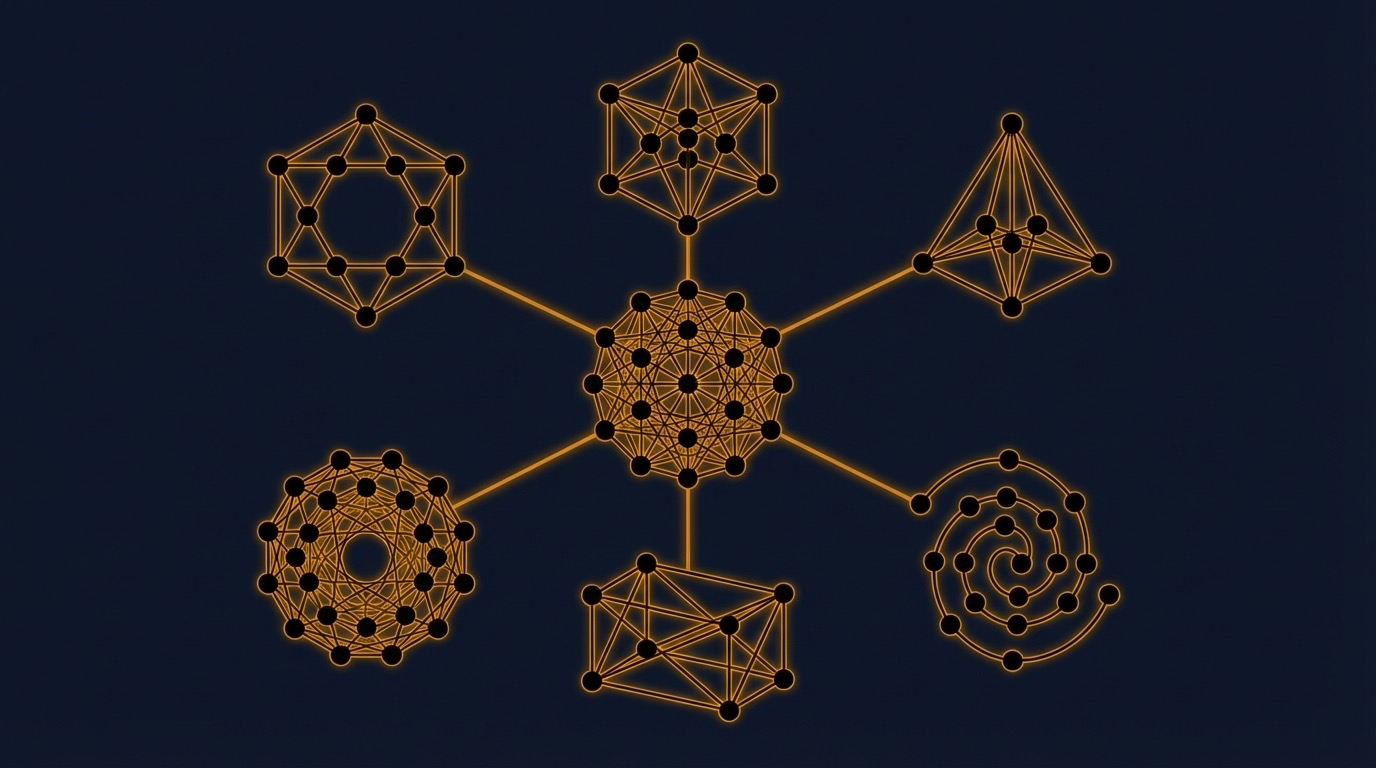
The 6 Research Frameworks Behind Synthicant's Persona Templates
Most AI persona tools give you a blank text box. Describe your user, get a chatbot. No methodology, no rigor, no reproducibility.
Synthicant takes a different approach. Every one of our 22 default persona templates is built on an established research framework used by professional product teams, UX researchers, and enterprise sales organizations. Here's what they are and why they matter.
1. Cooper Behavioral Personas (1999)
Source: Alan Cooper, The Inmates Are Running the Asylum
The original persona framework. Cooper's insight was that personas should be defined by goals and behaviors, not demographics. A 28-year-old and a 55-year-old might have the same goal ("evaluate this tool quickly") but different behaviors.
Synthicant templates:
- The Enthusiast — Goal: find the next tool that gives them an edge
- The Reluctant User — Goal: get through the task with minimum disruption
- The Power User — Goal: maximum control and efficiency
- The Evaluator — Goal: make a defensible recommendation to leadership
Best for: Usability testing, feature prioritization, onboarding flow design.
2. Buyer Personas / Revella (2015)
Source: Adele Revella, Buyer Personas: How to Gain Insight into Your Customer's Expectations
Revella's framework focuses on the buying decision, not the user experience. Her Five Rings of Buying Insight — priority initiative, success factors, perceived barriers, buyer's journey, and decision criteria — define what matters when someone is deciding whether to purchase.
Synthicant templates:
- The Champion — Your internal advocate selling the tool to their team
- The Blocker — Finds reasons to say no, protects the team from bad decisions
- The Budget Holder — Controls the money, cares about ROI not features
- The End User — Will actually use the product daily, cares about experience
Best for: B2B sales cycles, pricing strategy, competitive positioning.
3. Rogers Adoption Curve (1962)
Source: Everett Rogers, Diffusion of Innovations
Rogers identified five adopter categories that predict how new products spread through a market. Each category has distinct risk tolerance, information needs, and decision-making patterns.
Synthicant templates:
- The Innovator (first 2.5%) — Tolerates bugs, wants bleeding-edge access
- The Early Adopter (next 13.5%) — Opinion leaders who influence others
- The Early Majority (34%) — Adopts after seeing social proof
- The Late Majority (34%) — Adopts only when the old way stops working
- The Laggard (last 16%) — Adopts only when forced
Best for: Go-to-market strategy, launch sequencing, crossing the chasm.
4. Jobs to Be Done / Christensen (2016)
Source: Clayton Christensen, Competing Against Luck
JTBD reframes the question from "who is the user?" to "what job is the user hiring your product to do?" The same person might hire your product for different jobs at different times.
Synthicant templates:
- Validate My Idea Fast — Job: know if this idea is worth pursuing before I build it
- Convince My Stakeholders — Job: back up my recommendation with evidence
- Find Out Why Users Churn — Job: identify the top 3 reasons users leave
Best for: Product-market fit, feature prioritization, understanding motivation.
5. Gartner Buying Committee (Gartner/CEB)
Source: Gartner/CEB Research (now part of Gartner)
Enterprise purchases involve 6-10 stakeholders. Each plays a different role in the decision. Understanding these roles lets you tailor messaging and address objections before they kill the deal.
Synthicant templates:
- The Initiator — Identifies the need, starts the buying process
- The Influencer — Shapes the decision through domain expertise
- The Gatekeeper — IT, legal, or compliance; blocks by default
Best for: Enterprise sales, stakeholder mapping, security/compliance messaging.
6. Customer Lifecycle (Product/CS Standard)
Source: Widely used across product management and customer success teams
Users behave differently at different stages of their relationship with your product. A Day 1 user has different needs than a user who's been active for 6 months and is now considering alternatives.
Synthicant templates:
- The Onboarding User — First 30 days, forming initial impressions
- The At-Risk User — Usage declining, considering alternatives
- The Advocate — NPS 9-10, refers others, defends you publicly
Best for: Retention strategy, onboarding optimization, churn prevention.
The OCEAN layer: what makes it work
Every template above is enhanced with OCEAN personality traits on a 1-5 Likert scale, aligned with the NEO-PI-R standard (Costa & McCrae, 1992). This is the critical differentiator.
A "Blocker" with high neuroticism (4/5) and low agreeableness (1/5) will grill you on security vulnerabilities and vendor risk. The same "Blocker" archetype with moderate neuroticism (3/5) and moderate agreeableness (3/5) will raise concerns but be open to compromise.
The framework defines what the persona cares about. OCEAN defines how they express it. Together, they produce personas that are both strategically useful and psychologically realistic.
Further reading
- Costa & McCrae — NEO-PI-R (1992) — The gold standard Big Five personality inventory
- John & Srivastava — Big Five Taxonomy (1999) — Most-cited overview of the OCEAN model
- Park et al. — Generative Agents (2023) — Stanford/Google research on believable LLM agents
- Rogers — Diffusion of Innovations (1962) — The adoption curve framework
- Christensen — Jobs to Be Done — Hiring products for jobs
- Revella — Buyer Personas (2015) — B2B buyer decision research
Try all 22 framework-based templates with a free 14-day trial. Start now.